Quick Summary
Is artificial grass safe for kids and pets? When the right materials and infill are used, modern synthetic turf is one of the safer surfaces available for families, free of pesticides, mud, and the parasites that thrive in natural soil. This guide breaks down exactly what makes a turf system safe: the materials it's made from, how it handles heat, what toxicity actually means in this context, and which certifications confirm a product meets real safety standards rather than just marketing claims.
Parents and pet owners researching synthetic grass for the home almost always land on the same question early in the process: is this actually safe for my kids and animals to spend hours on every day? It's a fair question, and the honest answer depends entirely on the materials, infill, and manufacturing standards behind the specific product being installed.
Not all turf is built the same way, and the difference between a safe, well-engineered lawn and a problematic one comes down to details most homeowners never think to ask about. This guide walks through exactly what to look for.
What Artificial Grass Is Actually Made Of
Understanding safety starts with understanding the materials. Quality residential turf is built from polyolefin, a category that includes polyethylene and polypropylene. These are the same general plastic types used in food containers, children's toys, and medical equipment, chosen specifically because they are chemically stable and do not break down into harmful substances under normal use.
The blades themselves are typically polyethylene, prized for its soft, grass-like feel underfoot and bare skin. The backing, which holds the blades in place, often uses polypropylene for structural strength. Both materials are recyclable, and a fully built turf system, blades, backing, and infill together, can be 100% recyclable depending on the product.
What you want to avoid is turf or infill made with recycled crumb rubber, commonly sourced from used tires. Crumb rubber has faced ongoing scrutiny over the chemicals it can contain, including trace heavy metals and compounds linked to health concerns with prolonged exposure. Most premium residential turf products today use sand or specialized coated infill instead of crumb rubber for exactly this reason.
Is Artificial Grass Safe for Kids? What the Materials Tell Us
For families asking if artificial grass is safe for kids, the materials answer is reassuring when the product is chosen correctly. Quality synthetic turf:
- Contains no pesticides, herbicides, or fertilizers, unlike natural lawns that are frequently treated with chemicals to stay green
- Does not attract disease-carrying pests like ticks and fleas the way natural grass and soil can
- Eliminates exposure to mud, allergenic pollen from grass flowering, and the bacteria that live in damp natural soil
- Provides a consistent, even surface that reduces tripping hazards compared to uneven natural lawns
The infill matters just as much as the blades. Fine sand, especially when antimicrobial-coated, is the standard for residential and play applications. It resists bacterial growth, does not retain odor the way some materials can, and contains no lead or heavy metals when sourced from a reputable manufacturer.
For families with very young children who spend significant time on hands and knees, it is worth asking your installer directly what infill product is being used and requesting documentation confirming it is free of lead and heavy metals. A transparent installer will have this information readily available.
Artificial Grass Safety for Pets: What Owners Should Know
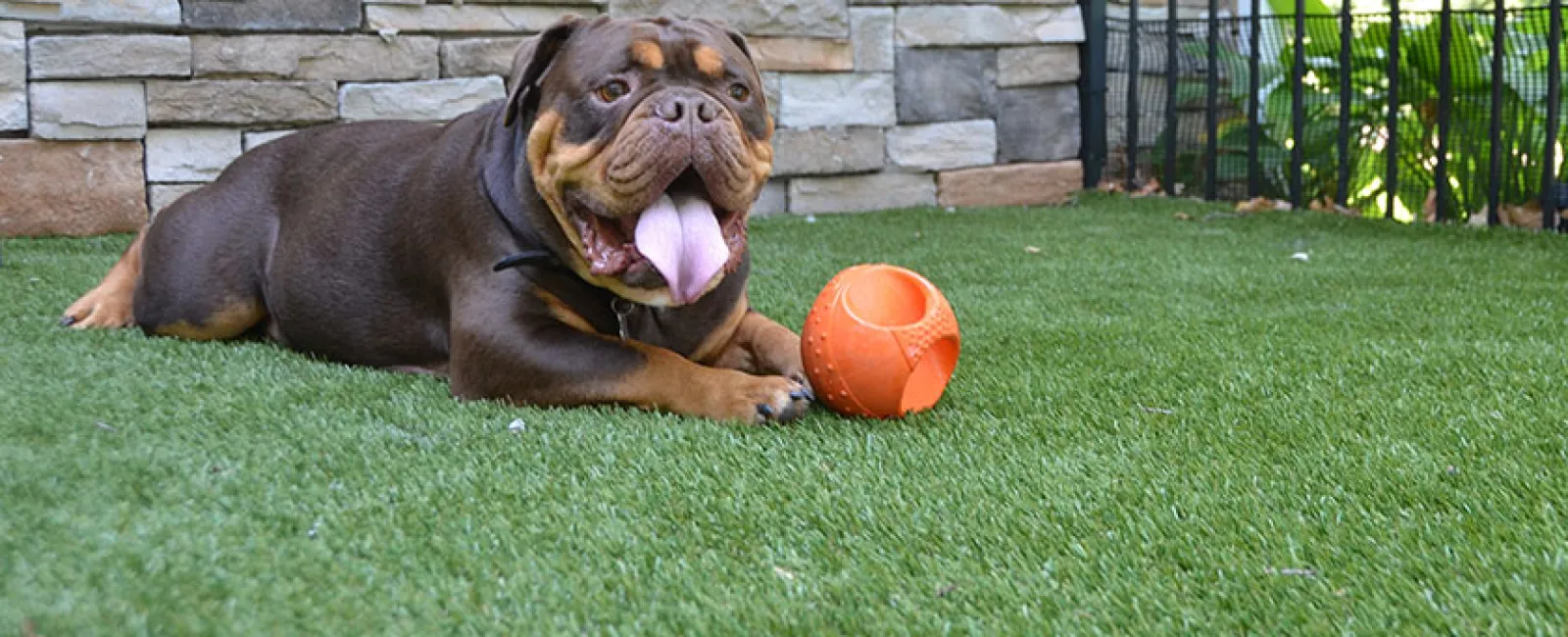
Artificial grass safety for pets involves a slightly different set of considerations than child safety, mostly centered on durability, odor control, and bacterial hygiene.
Urine and odor management
A common concern among pet owners is whether synthetic turf will hold onto urine odor over time. Quality pet turf is engineered with enhanced drainage, often exceeding 400 inches per hour, specifically to let liquid pass through quickly rather than pooling on the surface or in the backing. Antimicrobial infill further helps prevent the bacterial growth that causes lingering odor.
Paw and joint comfort
Densely built pet turf with the right pile height provides a comfortable surface for paws without the hot spots, holes, or muddy patches that develop in natural grass under heavy dog traffic. It also eliminates exposure to lawn chemicals that can be genuinely harmful if licked or ingested.
Durability under heavy use
Dogs are tough on lawns. The right pet-specific turf product is built with reinforced backing and denser fiber construction to resist matting and wear from digging, running, and repeated traffic in the same areas, which is exactly where natural grass typically fails first.
No toxic plant exposure
Natural lawns sometimes include plants that are mildly to seriously toxic if pets ingest them. A properly installed synthetic lawn removes this risk entirely from the play area itself.
Heat: What Families Need to Know
Heat is one of the most commonly raised concerns, and it deserves a direct, honest answer rather than a dismissive one. Artificial turf can get hotter than natural grass on direct, full-sun summer days, sometimes significantly so depending on the product and infill type.
This is exactly why infill choice matters so much. Older crumb rubber infill is notorious for trapping and radiating heat, with surface temperatures climbing well above what is comfortable or safe for bare feet and paws. This is one of the central reasons crumb rubber has fallen out of favor for residential and play applications.
Modern infill alternatives, including coated sand products, perform meaningfully better in this regard and are specifically engineered to reduce heat retention compared to older rubber-based systems. Our premium turf and infill options are selected with this in mind. Turf fiber color and density also play a role, with lighter-colored, well-engineered blades reflecting more heat than darker, denser alternatives.
Practical heat management tips for families:
- Rinse the lawn with a hose on hot days, which cools the surface quickly and effectively
- Plan high-activity outdoor time for morning or evening hours during peak summer heat
- Consider shaded turf areas for play zones, using trees or shade structures
- Ask your installer specifically what infill and turf product they recommend for heat performance in your climate
Toxicity: Separating Real Concerns from Outdated Information
A lot of the toxicity concern attached to artificial grass traces back specifically to crumb rubber infill, not synthetic turf as a category. This distinction matters enormously when researching safety.
Crumb rubber, made from recycled tires, has been associated with off-gassing and the presence of trace contaminants including heavy metals and volatile organic compounds. Concerns here have driven much of the broader skepticism around artificial turf safety, particularly for athletic fields and playgrounds where exposure is frequent and prolonged.
Modern residential turf systems built around polyolefin blades and sand-based infill avoid these specific concerns. Reputable manufacturers test their products for lead and heavy metal content and can provide documentation confirming compliance with relevant federal safety standards. If a turf product or installer cannot provide this kind of documentation, that is a meaningful red flag worth taking seriously.
The bottom line: toxicity in artificial grass is almost entirely a function of the specific infill and backing materials used, not an inherent property of synthetic turf as a whole. Choosing a product with transparent, tested materials resolves the concern directly.
Certifications and Standards to Look For
These are the specific credentials worth asking about when evaluating turf for a household with kids or pets.
- IPEMA certification: The International Play Equipment Manufacturers Association certifies turf and infill products specifically for playground safety, covering both material composition and performance standards. This is one of the most relevant certifications for families with children.
- Lead and heavy metal testing documentation: Reputable manufacturers test finished products and can provide lab documentation confirming the absence of lead and heavy metals. Ask for this directly rather than accepting a verbal assurance.
- Federal safety standard compliance: Quality turf products are tested against relevant federal consumer safety standards covering toxic substances in materials intended for environments where children are present.
- Antimicrobial infill certification: For pet households specifically, antimicrobial treatment on infill should come with documentation of what the treatment is and how it performs, rather than a generic "pet-friendly" label with no supporting detail.
A properly certified turf and infill system gives families concrete, verifiable assurance rather than asking them to take safety claims on faith.
Ready for a Lawn That's Safe for the Whole Family?
Turf Tek USA builds every residential installation around materials engineered for households with kids and pets, using American-made turf and antimicrobial infill free of lead and heavy metals. Our playground and pet-area installations meet IPEMA certification standards, and everyone on our team is experienced and knowledgeable on how to properly install for Northeast conditions.
We back every project with a 10-year product warranty and 2-year installation warranty. Call (631) 651-5777 or contact us for a free site visit and a straightforward conversation about exactly what's in the turf going into your yard.